The information on this website is general in nature and does not take into account your objectives, financial situation, or needs. Consider seeking personal advice from a licensed adviser before acting on any information.
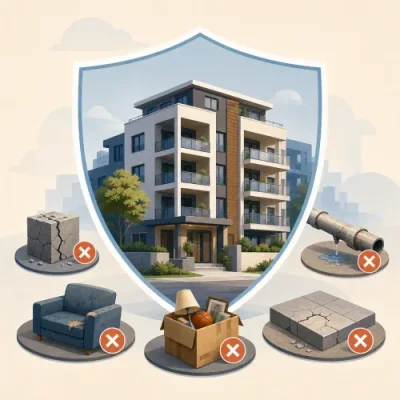
Strata insurance can protect shared buildings and common property, but it does not cover every type of damage, cost or dispute. This guide explains common strata insurance exclusions, how maintenance issues can affect claims, and what owners and committees can do before a problem occurs.
Strata insurance is an important part of owning or managing an apartment, townhouse or unit in an Australian strata scheme. It generally helps protect the building and common property, but it is not designed to cover every loss that happens on the property.
Understanding what strata insurance usually does not cover can help apartment owners, strata committees and owners corporations avoid assumptions before a claim occurs. The exact outcome of any claim depends on the policy wording, the policy schedule, the insurer's assessment, the cause of the damage and the circumstances of the strata scheme.
This article provides general information only. It does not replace reading the relevant product disclosure statement, policy documents or obtaining professional advice for your strata scheme.
What strata insurance is generally designed to cover
Before looking at exclusions, it helps to understand the role of a strata insurance policy. In broad terms, strata insurance is usually arranged by the owners corporation or body corporate for the benefit of the strata scheme. It commonly focuses on the building, common property and shared areas rather than the personal belongings of individual owners or tenants.
Depending on the policy and the relevant state or territory requirements, strata insurance may include cover for:
- the building structure and common property;
- shared facilities such as lifts, foyers, pools, driveways, gardens and car parks;
- public liability for certain injury or property damage claims involving common property;
- some fixtures, fittings and improvements, depending on the strata plan and policy wording;
- certain costs following an insured event, such as professional fees or removal of debris, where included by the policy.
For a broader overview of strata insurance in Australia, the Insurance for Strata homepage explains the general purpose of strata cover and how it may fit into property risk management.
Why strata insurance exclusions matter
A common misconception is that if damage affects a strata building, the strata insurer will automatically pay for it. In practice, insurers assess whether the event is covered, whether any exclusion applies, whether policy conditions were met and whether the claimed costs fall within the policy limits.
Strata insurance exclusions matter because they help define the boundary between an insured event and ordinary ownership, maintenance or management responsibility. Some costs may need to be paid by the owners corporation, an individual lot owner, a tenant, a contractor or another party rather than the strata insurer.
Exclusions can also affect how disputes are handled. For example, a committee may believe water damage is an insurance issue, while the insurer may assess it as a maintenance issue caused by long-term deterioration. Having clear records and understanding the policy wording can make these situations easier to manage.
Common strata insurance exclusions
Every policy is different, but the following issues are commonly excluded or limited in strata insurance policies. The wording and effect of each exclusion can vary, so the policy documents should always be checked.
Wear and tear
Wear and tear strata insurance issues are among the most common sources of confusion. Insurance is generally intended for sudden, accidental or defined insured events, not the ordinary ageing of a building.
Examples may include deteriorating roof materials, ageing waterproof membranes, corroded pipes, worn carpets in common areas or cracking caused by gradual movement over time. If the main cause of damage is gradual deterioration rather than a sudden insured event, the claim may be declined or only partly covered.
Maintenance issues and gradual damage
Strata insurance maintenance issues can be particularly important. Insurers may decline a claim where damage results from a failure to maintain the property, repair a known defect or respond to a recurring issue.
Examples can include repeated water ingress that was not properly investigated, gutters that were not maintained, leaks that were ignored, or damage that worsened because temporary repairs were not arranged when reasonably possible. A policy may still respond to some sudden damage, but not to the underlying maintenance problem itself.
Defective workmanship, design or materials
Damage linked to building defects, poor workmanship, faulty design or unsuitable materials may be excluded or limited. This can be relevant for newer developments, major renovations, waterproofing failures, façade issues or structural problems.
There can be a distinction between the defective item itself and resulting damage to other insured property. For example, a policy might exclude the cost of fixing defective waterproofing but consider related sudden damage if the policy wording allows it. These distinctions are technical and should be reviewed carefully.
Pest, mould, rust and corrosion
Many strata policies exclude or limit damage caused by pests, vermin, insects, mould, mildew, rot, rust, corrosion or gradual contamination. These issues are often treated as maintenance or building condition matters rather than insured events.
If a pest issue leads to structural damage, or mould appears after a leak, the insurer will usually consider the cause, timing, maintenance history and whether reasonable steps were taken to prevent further damage.
Lot owner contents and personal belongings
Strata insurance generally does not cover an individual owner's or tenant's personal belongings. Furniture, electronics, clothing, jewellery, appliances that are not treated as building fixtures, and other personal items usually need separate contents insurance.
Owners who lease out their unit may also need to consider landlord insurance for risks such as tenant-related damage, loss of rent or landlord contents, depending on their circumstances and policy options.
Some improvements inside individual lots
Whether internal fixtures or improvements are covered can be complex. Items such as floating floors, kitchen upgrades, bathroom renovations, air-conditioning units, blinds or built-in cabinetry may be treated differently depending on the strata plan, by-laws, state or territory rules and policy wording.
Owners should not assume that every improvement inside their lot is covered by the strata policy. If a lot has been renovated, it is worth checking whether the improvement is common property, lot property, owner responsibility or specifically included in the strata insurance policy.
Intentional, reckless or illegal acts
Insurance policies commonly exclude deliberate damage, dishonest conduct, fraud, illegal activity or reckless acts by insured parties. Claims may also be affected if information is withheld or if the insurer is misled during the application, renewal or claims process.
Where a tenant, visitor or unknown person causes damage, the position can depend on the facts and the policy wording. The insurer may consider who caused the damage, whether the person was acting with authority, and whether any other policy exclusion applies.
Business activities and non-standard use
Strata insurance is generally priced and underwritten based on the disclosed use of the building. If part of the property is used for commercial activity, short-stay accommodation, high-risk storage or other non-standard purposes, the insurer may need to know.
Failure to disclose relevant use of the property may affect future claims or policy terms. The outcome depends on the policy, the insurer's criteria and the circumstances.
Flood, storm surge and other specifically defined events
Some natural events may be defined very specifically in insurance policies. For example, flood, stormwater run-off, rainwater ingress and storm surge can be treated differently. A strata committee should not assume that one type of water damage is automatically covered because another type is included.
Natural hazard cover can also depend on location, policy options, exclusions and underwriting conditions. If the property has a history of flooding, storm damage or water ingress, this should be discussed when reviewing cover.
Costs below the excess or outside policy limits
A claim may technically be covered but still not result in a payment if the repair cost is below the excess. In other cases, a claim may be paid only up to a policy limit or sub-limit.
Excesses and limits can apply differently depending on the type of claim. Water damage, glass, liability, catastrophe events or optional extensions may each have different conditions. Committees should understand these before deciding whether to lodge a claim.
When a strata insurance claim may be denied or reduced
A strata insurance claim denied by an insurer does not always mean the damage did not occur. It usually means the insurer has decided that the claimed loss does not meet the policy requirements, or that an exclusion or condition applies.
Common reasons a claim may be declined, limited or reduced include:
- the damage was caused by gradual deterioration rather than an insured event;
- the issue resulted from poor maintenance or an unresolved known defect;
- the affected property is not covered by the strata policy;
- the claim relates to a lot owner's personal contents or landlord risk;
- the event is specifically excluded under the policy wording;
- the loss falls below the applicable excess;
- the claim exceeds a policy limit or sub-limit;
- the insurer was not given enough evidence to confirm the cause or value of the loss;
- policy conditions, disclosure obligations or notification requirements were not met.
In some situations, only part of a claim may be covered. For example, the insurer may pay for sudden insured damage to common property but decline the cost of replacing an old pipe, membrane or component that caused the issue.
Maintenance history can influence claims and premiums
Good maintenance does not guarantee that a claim will be accepted, but poor maintenance can make claims more difficult. Maintenance records help show whether the owners corporation acted reasonably before and after the damage occurred.
Useful records may include:
- regular inspection reports;
- roof, gutter, drainage and waterproofing maintenance records;
- minutes showing committee decisions about repairs;
- contractor reports and invoices;
- photos of damage and repairs;
- records of complaints from owners or tenants;
- evidence of temporary steps taken to prevent further damage.
Claims history, building condition and unresolved maintenance issues may also influence future insurance terms or premiums. If your committee is reviewing cover or budgeting for insurance costs, a strata insurance calculator may help with general planning, although actual premiums, excesses and policy options depend on insurer assessment and the scheme's circumstances.
Who is responsible when strata insurance does not cover the damage?
Responsibility depends on the cause of the damage, the location of the affected property, the strata plan, by-laws, legislation in the relevant state or territory and any applicable contracts or warranties. The table below outlines common scenarios in general terms.
| Issue | Common insurance position | Possible responsibility to check |
|---|
| Personal belongings inside a unit | Usually not covered by strata insurance | Lot owner, tenant or contents insurer |
| Gradual roof deterioration | Often excluded as wear and tear or maintenance | Owners corporation or body corporate |
| Sudden storm damage to common property | May be covered if policy conditions are met | Strata insurer, subject to excesses and limits |
| Defective waterproofing from a renovation | May be excluded or limited | Lot owner, owners corporation, contractor or warranty process depending on facts |
| Injury on common property | May fall under public liability cover if policy responds | Strata insurer and owners corporation, depending on circumstances |
This table is a guide only. Responsibility can be disputed, especially where damage crosses the boundary between lot property and common property.
How to reduce the risk of uncovered claims
No strata scheme can remove every insurance risk, but committees and owners can reduce the chance of unpleasant surprises by actively managing maintenance, disclosure and policy review.
- Read the exclusions section: Review the product disclosure statement, policy schedule and endorsements, not just the summary of cover.
- Clarify property boundaries: Understand what is common property and what belongs to individual lots under the strata plan.
- Keep maintenance current: Address leaks, drainage issues, roof concerns, cracking and safety hazards before they become larger problems.
- Record decisions: Keep minutes, reports and invoices so the committee can show what action was taken.
- Disclose relevant changes: Tell the insurer or broker about renovations, commercial use, short-stay letting, defects, claims history or major changes to occupancy where relevant.
- Review excesses and limits: A lower premium may come with higher excesses or tighter limits, which can affect claim outcomes.
- Encourage owners to arrange their own cover: Lot owners should consider whether they need contents, landlord or other insurance for risks not covered by the strata policy.
Questions to ask before choosing or renewing strata insurance
When comparing strata insurance providers or renewing an existing policy, exclusions should be considered alongside price. A cheaper premium may not provide the cover, limits or claims support that a scheme expects, while a higher premium does not automatically mean every risk is covered.
Useful questions include:
- What are the main exclusions for water damage, defects, wear and tear and maintenance issues?
- How does the policy define flood, storm, rainwater ingress and escape of liquid?
- Which internal lot fixtures or improvements are included or excluded?
- What excess applies to different types of claims?
- Are there sub-limits for particular events or costs?
- What building information must be disclosed at renewal?
- How are known defects, prior claims or unresolved maintenance issues treated?
- What evidence will the insurer usually request if a claim is lodged?
If the policy wording is difficult to interpret, committees may wish to seek assistance from a qualified insurance professional. The brokers page can be a useful starting point for understanding when specialist support may help with policy comparison, exclusions and claims questions.
What to do if a claim is not covered
If an insurer declines or reduces a claim, the owners corporation should ask for the reasons in writing and compare those reasons with the policy wording. It may also be helpful to gather any missing maintenance records, contractor reports, photos, invoices or expert opinions that address the cause of the damage.
Practical steps include:
- Request a clear written explanation of the insurer's decision.
- Check the relevant policy exclusion, condition, limit or excess.
- Confirm whether the declined cost relates to the damaged property, the cause of damage or both.
- Review committee records to see whether maintenance or notification issues are relevant.
- Consider whether another party, warranty, contractor or individual owner may be responsible.
- Use the insurer's review or complaints process if the committee believes the decision is incorrect.
- Seek professional guidance where the amount is significant or the policy wording is unclear.
Even if insurance does not respond, the owners corporation may still need to arrange urgent repairs to protect safety, prevent further damage and meet its property management obligations.
Conclusion: know the limits before a claim occurs
Strata insurance is a valuable protection for shared buildings and common property, but it has limits. Common exclusions include wear and tear, maintenance issues, defects, gradual damage, pest damage, personal belongings, some lot owner improvements and events that fall outside the policy wording.
The best time to understand these limits is before a claim occurs. By reading the policy documents, maintaining the building, keeping clear records and asking informed questions at renewal, apartment owners and strata committees can make more confident decisions about their insurance arrangements.
Claim outcomes, premiums and available cover depend on the individual strata scheme, insurer criteria and policy terms. When in doubt, seek guidance before assuming that a particular loss will or will not be covered.
Published: Saturday, 6th Dec 2025
Author: Paige Estritori



No comments yet. Be the first to share your thoughts.